
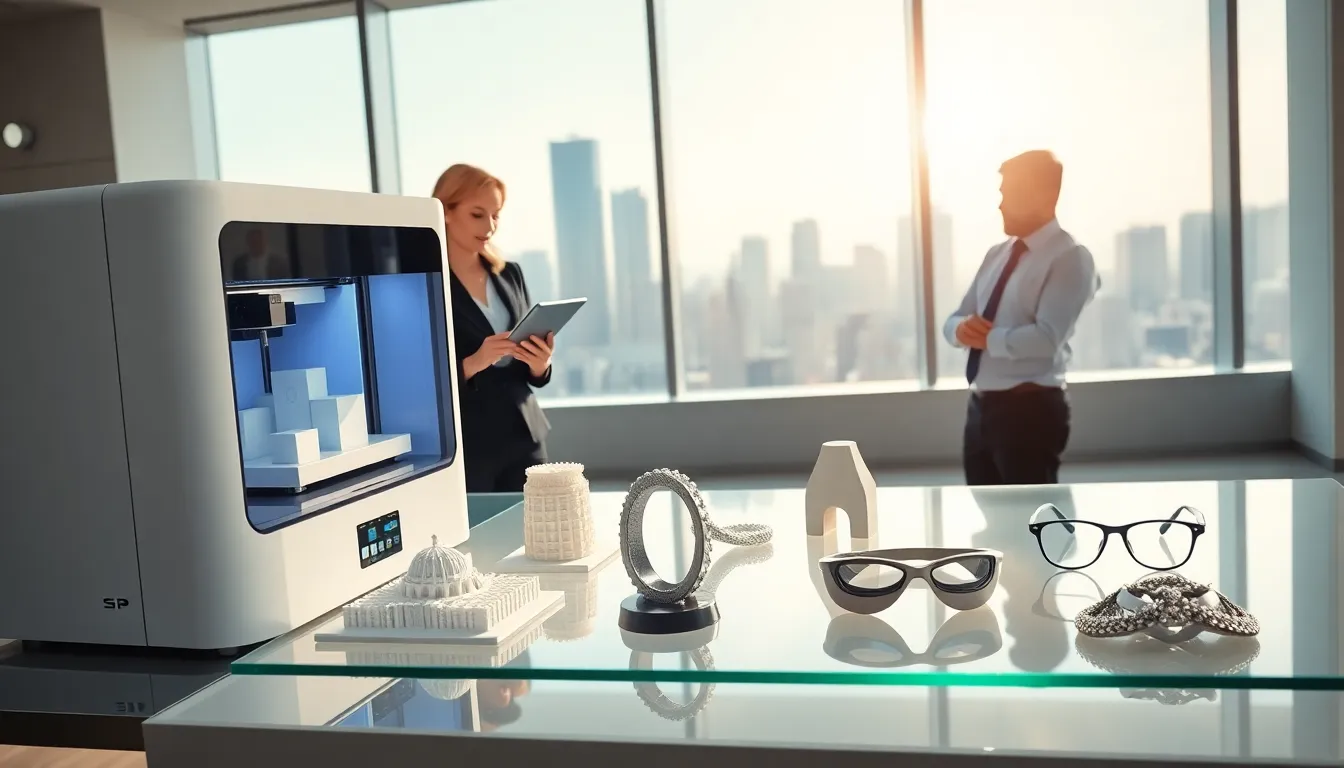
3D printing examples now span nearly every major industry, from healthcare to aerospace to fashion. This technology creates physical objects layer by layer from digital designs. What started as a prototyping tool has become a full-scale manufacturing method that saves time, reduces waste, and enables designs that traditional methods can’t achieve.
The global 3D printing market reached $18.3 billion in 2024 and continues to grow rapidly. Companies use additive manufacturing to produce everything from replacement organs to rocket parts to custom jewelry. These applications share a common thread: they solve real problems faster and more efficiently than conventional approaches.
This article explores the most impactful 3D printing examples across six key sectors. Each section highlights specific use cases, benefits, and recent developments that show how this technology changes the way industries operate.
Table of Contents
ToggleKey Takeaways
- 3D printing examples now span healthcare, aerospace, automotive, construction, fashion, and consumer goods—transforming how industries design and manufacture products.
- Medical 3D printing creates custom prosthetics in days instead of weeks and enables bioprinting of tissues that could eventually solve the organ transplant shortage.
- Aerospace companies like GE Aviation and SpaceX use 3D printed parts to reduce weight, increase durability, and handle extreme conditions in jet engines and rockets.
- Construction-scale 3D printing can produce entire homes in under 48 hours, with Dubai aiming for 25% of new buildings to be 3D printed by 2030.
- Consumer applications include custom eyewear, replacement parts on demand, and athletic gear like Adidas midsoles tailored to individual specifications.
- From haute couture fashion to fine art sculptures, creative industries leverage 3D printing examples to achieve intricate designs impossible through traditional craftsmanship.
Medical and Healthcare Applications
Medical 3D printing examples represent some of the most life-changing uses of this technology. Hospitals and research labs now print custom prosthetics, surgical guides, and even human tissue.
Custom Prosthetics and Implants
Traditional prosthetics require weeks of fittings and adjustments. 3D printing cuts that timeline to days. A scan of the patient’s body creates a digital model, and printers produce a custom-fit device. Children who outgrow prosthetics quickly benefit especially, new limbs can be printed at a fraction of the cost.
Titanium 3D printed implants now replace hips, knees, and spinal components. These implants feature porous structures that encourage bone growth, improving patient outcomes.
Bioprinting and Organ Development
Researchers have successfully printed skin grafts, cartilage, and blood vessels. Bioprinting uses living cells as “ink” to create tissue structures. While fully functional organs remain years away, scientists have printed miniature livers and kidneys for drug testing.
This 3D printing example addresses a critical shortage. Over 100,000 people in the U.S. wait for organ transplants. Bioprinted organs could eventually eliminate that waitlist.
Surgical Planning and Training
Surgeons now practice complex procedures on 3D printed models of patient anatomy. A heart surgeon can hold a replica of a specific patient’s heart before operating. This preparation reduces surgery time and improves accuracy.
Aerospace and Automotive Manufacturing
Aerospace and automotive companies pioneered many 3D printing examples that other industries now adopt. These sectors demand lightweight, strong components, exactly what additive manufacturing delivers.
Aircraft Components
GE Aviation prints fuel nozzles for jet engines. These 3D printed parts consolidate 20 separate components into one piece, reducing weight by 25% and increasing durability fivefold. Boeing has installed over 70,000 3D printed parts across its commercial aircraft fleet.
Airbus uses 3D printing for cabin brackets, air ducts, and structural components. Each kilogram saved on an aircraft reduces fuel consumption over its lifetime.
Rocket and Space Applications
SpaceX prints SuperDraco engine chambers from Inconel, a nickel-chromium superalloy. This 3D printing example demonstrates how additive manufacturing handles extreme temperatures and pressures. Relativity Space takes this further, their Terran 1 rocket uses 3D printing for 85% of its components.
NASA prints tools and replacement parts aboard the International Space Station. Astronauts don’t wait months for supply missions. They download designs and print what they need.
Automotive Innovation
Car manufacturers use 3D printing for prototypes, custom parts, and limited production runs. Bugatti prints titanium brake calipers that weigh 40% less than conventional versions. Ford produces thousands of parts daily across its facilities.
Electric vehicle makers embrace these 3D printing examples enthusiastically. Lighter components extend battery range, a critical advantage in the EV market.
Consumer Products and Home Goods
Consumer-focused 3D printing examples show how this technology reaches everyday life. From eyewear to furniture to replacement parts, additive manufacturing serves individual needs.
Custom Eyewear
Companies like Luxexcel and Materialise print prescription lenses and frames. Customers receive glasses shaped to their exact facial measurements. The frames weigh less and fit better than mass-produced alternatives.
Furniture and Home Décor
3D printed furniture ranges from intricate lattice chairs to full-size tables. Dutch designer Dirk Vander Kooij creates chairs from recycled refrigerator plastic using industrial 3D printers. Each piece takes about three hours to produce.
Home goods manufacturers print lampshades, vases, and decorative objects with geometric patterns impossible to achieve through molding or carving. These 3D printing examples appeal to consumers seeking unique items.
Replacement Parts on Demand
Broken appliance knob? Missing cabinet hardware? 3D printing files for common replacement parts exist online. Some manufacturers now offer downloadable designs for discontinued product components. This approach extends product life and reduces waste.
The sporting goods industry provides notable 3D printing examples too. Adidas prints midsoles for running shoes. Wilson creates custom-fit baseball gloves. These products perform better because they match individual athlete specifications.
Architecture and Construction
Construction 3D printing examples scale additive manufacturing to building-size projects. Large printers now produce houses, bridges, and commercial structures.
3D Printed Houses
ICON, a Texas-based company, prints homes in under 48 hours of print time. Their structures use a proprietary concrete material called Lavacrete. A 3D printed community in Austin now houses formerly homeless residents.
Dubai aims to have 25% of new buildings constructed through 3D printing by 2030. The city already hosts the world’s largest 3D printed building, a two-story structure spanning 6,900 square feet.
Infrastructure Projects
The world’s first 3D printed steel bridge opened in Amsterdam in 2021. Engineers printed the 40-foot structure from stainless steel using wire-arc additive manufacturing. Sensors embedded in the bridge monitor its structural health.
China has produced several 3D printed concrete bridges, including a 86-foot pedestrian bridge that required only 450 hours to print.
Architectural Models and Prototypes
Architects use 3D printing for detailed scale models of proposed buildings. These models communicate design intent to clients better than renderings alone. Some firms print full-size facade sections to test materials and finishes.
These 3D printing examples reduce construction waste significantly. Traditional building methods generate substantial material scrap. Additive manufacturing uses only what each structure requires.
Art, Fashion, and Creative Design
Creative industries embrace 3D printing examples that push aesthetic boundaries. Artists, designers, and fashion houses use the technology to realize visions that traditional craftsmanship can’t achieve.
Fashion and Wearables
Iris van Herpen pioneered 3D printed haute couture. Her runway pieces feature intricate lattice structures and flowing forms that seem to defy gravity. These garments require no stitching, they emerge from printers as complete pieces.
Footwear brands experiment extensively with 3D printing. New Balance, Nike, and Under Armour all produce shoes with printed components. The technology allows rapid iteration on designs and small-batch production runs.
Jewelry and Accessories
3D printing transformed jewelry manufacturing. Designers create complex geometric patterns, interlocking pieces, and organic forms that would take master craftspeople weeks to produce by hand. Lost-wax casting from printed molds enables mass production of intricate designs.
Custom engagement rings represent a growing 3D printing example. Couples design unique settings, preview printed prototypes, and approve final versions before precious metals enter the process.
Fine Art and Sculpture
Artists use 3D printing to scale concepts from desktop models to monumental installations. Some embrace the layer lines as aesthetic elements. Others polish prints to smooth finishes indistinguishable from traditional sculpture.
Museums now 3D print replicas of fragile artifacts for handling and study. Visitors can touch a printed dinosaur bone or ancient tool while originals remain protected.


