
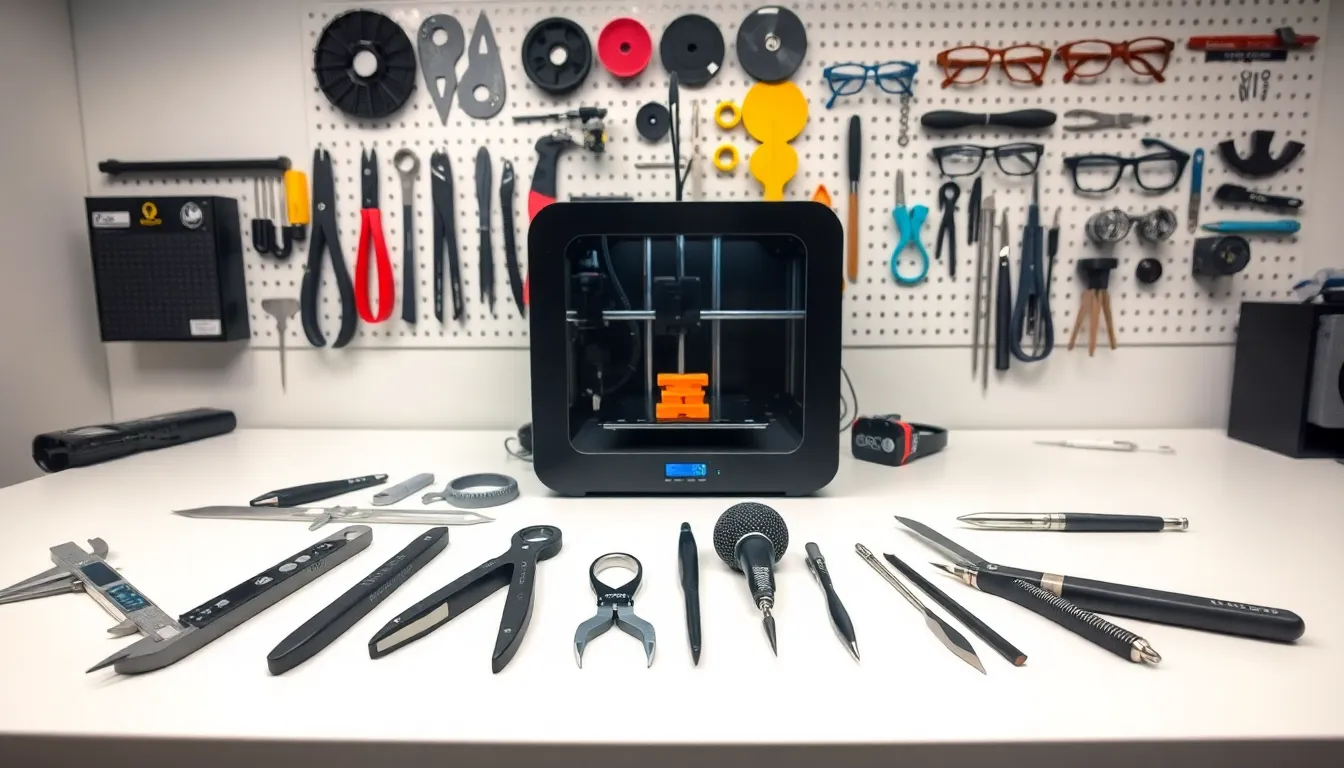
Building a collection of 3D printing tools transforms an average setup into a productive workspace. Beginners often focus on the printer itself and forget the accessories that make each project easier. The right tools help users remove prints cleanly, finish surfaces smoothly, and keep machines running at peak performance.
This guide covers the essential 3D printing tools every maker should own. From basic hand tools to safety equipment, each item serves a specific purpose in the printing workflow. Whether someone just unboxed their first printer or has years of experience, these tools will improve print quality and save time on every project.
Table of Contents
ToggleKey Takeaways
- Essential 3D printing tools include scrapers, flush cutters, needle-nose pliers, and tweezers for clean print removal and cleanup.
- Post-processing tools like sandpaper (150-2000 grit), needle files, and filler primers transform rough prints into polished, professional-looking pieces.
- Digital calipers and feeler gauge sets are must-have 3D printing tools for accurate calibration and consistent print quality.
- Keep nozzle cleaning needles and cleaning filament on hand to prevent clogs and failed prints.
- Safety gear—including safety glasses, nitrile gloves, and a respirator—protects against hot components, sharp tools, and harmful particles.
- Organize your workspace with tool holders, anti-static mats, and cleaning supplies like 90%+ isopropyl alcohol to maintain efficiency and print quality.
Basic Hand Tools for Print Removal and Cleanup
Getting a finished print off the build plate seems simple until a stubborn model refuses to budge. The right 3D printing tools make removal quick and prevent damage to both the print and the bed surface.
Scrapers and Spatulas
A thin metal spatula ranks as the most-used tool in any maker’s kit. The flexible blade slides under prints and lifts them without scratching glass or PEI sheets. Some users prefer a dedicated print removal tool with an angled edge for better leverage.
Plastic scrapers offer a safer option for delicate build surfaces. They won’t leave marks on magnetic flex plates or specialty coatings. Keep both metal and plastic options handy for different situations.
Flush Cutters and Precision Knives
Flush cutters snip support material close to the model surface. Quality cutters create clean cuts without crushing the plastic. They also trim filament ends and cut zip ties during cable management.
A precision hobby knife handles detail work that cutters can’t reach. Sharp blades remove small support remnants and trim layer lines from visible surfaces. Replace blades often, dull knives require more pressure and increase the risk of slipping.
Needle-Nose Pliers and Tweezers
Needle-nose pliers grip support structures in tight spaces. They provide enough torque to snap away material without touching the model itself. A good pair lasts for years with minimal maintenance.
Metal tweezers grab loose filament strands during print startup. They also remove small debris from the print bed and nozzle area. Heat-resistant tweezers work best since they can handle warm components safely.
Finishing and Post-Processing Tools
Raw prints often need additional work before they look their best. Post-processing 3D printing tools turn rough models into polished pieces.
Sandpaper and Sanding Tools
Sandpaper removes layer lines and smooths surfaces for painting or display. Start with 150-200 grit to remove major imperfections, then work up to 400-600 grit for a finer finish. Wet sanding with higher grits (800-2000) produces near-glass smoothness on certain materials.
Sanding sticks and flexible sanding pads reach curved surfaces that flat paper misses. Some makers use rotary tools with sanding attachments for large projects, though hand sanding offers more control on detailed models.
Files and Deburring Tools
Needle files shape edges and enlarge holes for proper fit. A basic set includes flat, round, half-round, and triangular profiles. These 3D printing tools prove essential when assembling multi-part models that require precise tolerances.
Deburring tools clean up edges quickly. A swivel-head deburring blade removes material in any direction, making it faster than filing for simple cleanup tasks.
Filling and Priming Supplies
Filler primer sprays hide layer lines and minor imperfections. Several light coats work better than one heavy application. After drying, sand the primer smooth before painting.
For deeper gaps and cracks, two-part epoxy putty or automotive body filler does the job. These products bond well to most 3D printing materials and sand easily once cured.
Maintenance and Calibration Equipment
Regular maintenance keeps 3D printers producing quality results. The right 3D printing tools make calibration and upkeep straightforward.
Nozzle Cleaning Tools
Clogged nozzles cause failed prints and poor quality. Acupuncture needles or specialized nozzle cleaning needles clear partial blockages. Insert them carefully while the nozzle is hot to push debris through.
Cold pulls (also called atomic pulls) remove stubborn clogs without disassembly. Some users keep cleaning filament on hand for routine nozzle maintenance between material changes.
Measurement and Calibration Instruments
Digital calipers measure filament diameter, part dimensions, and calibration results. A caliper accurate to 0.01mm costs under $20 and pays for itself quickly. Check filament diameter before loading new spools, variations affect print quality.
A metal feeler gauge set helps level the print bed accurately. The 0.1mm blade matches the typical gap between the nozzle and bed surface. This method beats the paper test for consistency.
Hex Keys and Driver Sets
Most 3D printers use metric hex bolts throughout. A quality hex key set covers sizes from 1.5mm to 6mm. Ball-end keys access bolts at angles, which helps during maintenance in tight spaces.
Keep spare nozzles, thermistors, and heating elements in stock. These components fail eventually, and having replacements avoids downtime. A small parts organizer keeps everything sorted and accessible.
Safety Gear and Workspace Essentials
3D printing involves hot components, sharp tools, and fine particles. Proper safety 3D printing tools protect makers from common hazards.
Protective Equipment
Safety glasses shield eyes from flying debris during print removal and post-processing. They also protect against splashing isopropyl alcohol used for bed cleaning.
Nitrile gloves prevent skin contact with resins (for SLA/resin printers) and certain solvents. They also keep oils from fingers off the print bed, improving first-layer adhesion.
A respirator or mask filters fumes and particles. This matters especially when sanding prints or working with ABS, which releases styrene vapor during printing.
Workspace Organization
A dedicated tool holder or pegboard keeps 3D printing tools within reach. Wall-mounted storage frees up desk space and makes it easy to grab the right tool quickly.
An anti-static mat protects electronics during maintenance. It also provides a clean surface for working on prints. Some makers add a silicone mat for heat resistance when handling warm components.
Cleaning Supplies
Isopropyl alcohol (90% or higher) cleans print beds and removes residue. Keep it in a spray bottle for easy application. Paper towels or lint-free cloths wipe surfaces without leaving fibers behind.
A small vacuum or brush clears dust and filament scraps from the printer. Regular cleaning prevents debris from affecting print quality or damaging moving parts.


