
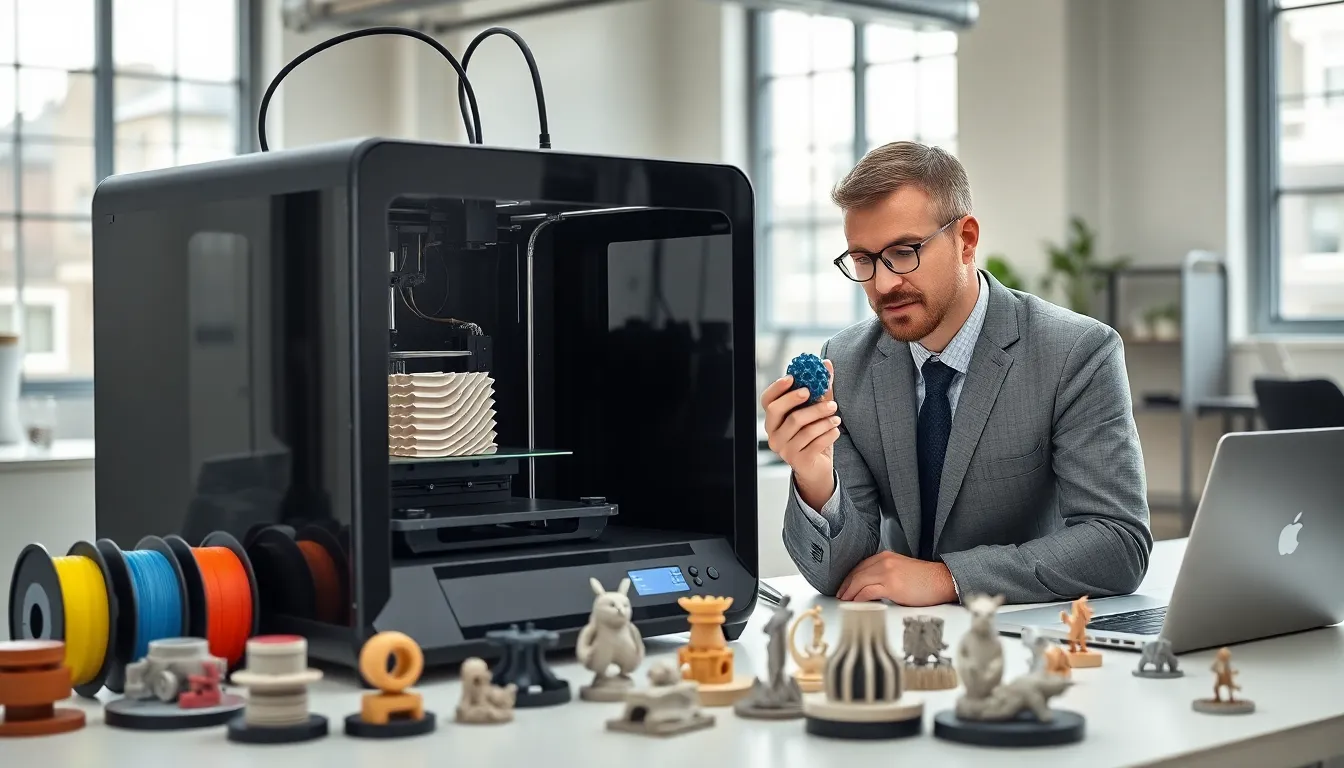
Finding the best 3D printing solution depends on experience level, intended use, and budget. A first-time hobbyist needs different features than a professional engineer producing functional prototypes. The market offers hundreds of options, and the differences between them matter more than most buyers realize.
This guide breaks down the top 3D printers across three categories: beginner, intermediate, and professional. It covers the key features that separate good machines from great ones, and helps readers invest their money wisely.
Table of Contents
ToggleKey Takeaways
- The best 3D printing solution depends on your experience level, intended use, and budget—beginners, intermediate users, and professionals have different needs.
- FDM printers are affordable and great for functional parts, while resin printers offer finer detail but require more post-processing.
- Beginners can get excellent results with budget-friendly options like the Creality Ender 3 V3 ($200) or Bambu Lab A1 Mini ($300) without spending thousands.
- Intermediate users should look for enclosed chambers, faster print speeds, and multi-material support—the Bambu Lab P1S and Prusa MK4S offer strong value around $700.
- Professional 3D printers like the Bambu Lab X1 Carbon and Formlabs Form 4 prioritize reliability, advanced materials, and precision for production environments.
- Prioritize auto-leveling, filament sensors, and ease of use to reduce troubleshooting time and improve your overall 3D printing experience.
What to Look for in a 3D Printer
Before comparing specific models, buyers should understand the features that define a quality 3D printer. Not every specification matters equally, and marketing hype can obscure what actually affects print quality.
Print Technology
Most consumer 3D printers use one of two technologies: FDM (Fused Deposition Modeling) or resin-based SLA/MSLA. FDM printers melt plastic filament and deposit it layer by layer. They’re affordable, forgiving, and work well for functional parts. Resin printers cure liquid resin with UV light, producing finer details but requiring more post-processing. The best 3D printing choice depends on what someone plans to make.
Build Volume
Build volume determines how large an object can be printed in one piece. A 220 x 220 x 250mm build plate handles most hobby projects. Professionals printing architectural models or large prototypes need 300mm or more in at least one dimension.
Print Resolution
Layer height affects surface smoothness. Most FDM printers achieve 0.1mm layers: resin printers reach 0.025mm or finer. Higher resolution means longer print times, so users should match resolution to their actual needs.
Ease of Use
Auto-leveling beds, filament sensors, and touchscreen interfaces reduce frustration, especially for beginners. These features add cost but save hours of troubleshooting. For the best 3D printing experience, new users should prioritize machines with reliable auto-leveling systems.
Top 3D Printers for Beginners
Entry-level 3D printers have improved dramatically in recent years. Today’s beginner machines deliver print quality that would have impressed professionals a decade ago.
Creality Ender 3 V3
The Ender 3 series remains the most recommended starting point for new users. The V3 model includes auto-leveling, a direct drive extruder, and Core XZ motion system. It prints at speeds up to 500mm/s while maintaining quality. At around $200, it offers exceptional value for anyone exploring 3D printing.
Bambu Lab A1 Mini
Bambu Lab disrupted the market with fast, reliable printers that work out of the box. The A1 Mini costs roughly $300 and requires almost zero calibration. It detects filament type automatically and prints quickly. For beginners who want the best 3D printing results without a learning curve, this machine delivers.
Anycubic Kobra 3
The Kobra 3 supports multi-color printing with its ACE Pro system. It handles four filament colors in a single print, opening creative possibilities for beginners. The auto-leveling system works reliably, and print quality matches more expensive competitors.
These entry-level printers prove that budget-friendly options can still produce impressive results. New users don’t need to spend thousands to start creating.
Best 3D Printers for Intermediate Users
Intermediate users understand the basics and want more capability. They need printers that handle diverse materials, offer larger build volumes, or deliver faster speeds without sacrificing quality.
Bambu Lab P1S
The P1S represents the sweet spot for serious hobbyists. Its enclosed chamber prints ABS, ASA, and other temperature-sensitive materials without warping. Print speeds reach 500mm/s, and the integrated camera allows remote monitoring. At approximately $700, it competes with machines costing twice as much.
Prusa MK4S
Prusa printers have earned a reputation for reliability and exceptional support. The MK4S features a 32-bit control board, quick-swap nozzles, and input shaping for smooth, fast prints. Prusa’s open-source philosophy means extensive community resources and upgrade paths. Users seeking the best 3D printing experience with long-term support choose Prusa.
Elegoo Saturn 4 Ultra
For those focused on resin printing, the Saturn 4 Ultra delivers 12K resolution on a 10-inch screen. It prints detailed miniatures, jewelry prototypes, and dental models with precision that FDM printers can’t match. The 150mm/h print speed reduces wait times significantly.
Intermediate printers bridge the gap between hobby and professional use. They handle demanding projects while remaining accessible to home users.
High-Performance 3D Printers for Professionals
Professional 3D printers prioritize reliability, material compatibility, and precision. Downtime costs money, so these machines are built for consistent output in production environments.
Bambu Lab X1 Carbon
The X1 Carbon handles carbon fiber, glass fiber, and other composite materials that would destroy lesser printers. Its hardened steel nozzle and enclosed chamber maintain stable temperatures for engineering-grade filaments. The LiDAR scanner detects print failures before they waste material. For professionals seeking the best 3D printing performance under $1,500, this machine sets the standard.
Formlabs Form 4
Formlabs dominates the professional resin market. The Form 4 prints up to five times faster than its predecessor while improving accuracy. It supports over 40 specialized resins, including biocompatible materials for dental and medical applications. The ecosystem includes automated post-processing stations that streamline production.
Raise3D Pro3
The Pro3 offers a 300 x 300 x 300mm build volume with dual extruders for multi-material printing. Its IDEX system prints two copies simultaneously, doubling throughput. Industrial-grade components ensure consistent performance across thousands of print hours.
Stratasys F370CR
At the high end, Stratasys machines print carbon fiber and ULTEM for aerospace and automotive applications. The F370CR delivers parts that meet strict engineering tolerances. It costs significantly more than consumer options but produces parts that match injection molding quality.


