
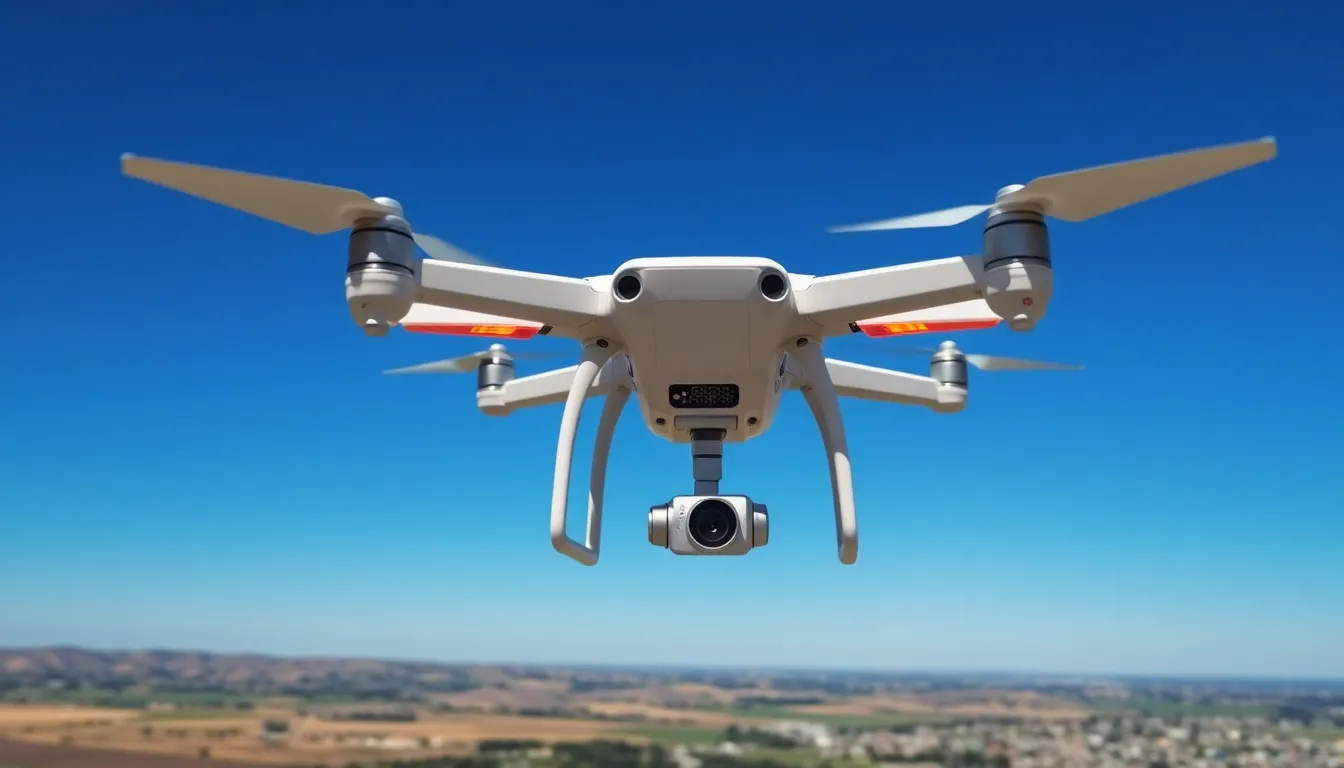
Drones have transformed industries, hobbies, and even how people capture everyday moments. These unmanned aerial vehicles (UAVs) fly without a pilot on board, relying on remote controls or autonomous software. From aerial photography to package delivery, drones now serve purposes that seemed impossible just a decade ago.
This guide covers everything readers need to know about drones. It explains how they work, explores the most popular types, and highlights real-world applications. Safety rules, legal requirements, and buying tips round out the discussion. Whether someone wants to fly recreationally or use drones for business, this article provides a clear starting point.
Table of Contents
ToggleKey Takeaways
- Drones are unmanned aerial vehicles that use rotors, GPS, and sensors to fly autonomously or via remote control.
- Popular drone types include consumer camera drones, racing drones, toy drones, commercial drones, and fixed-wing models—each suited for different purposes.
- Drones now serve critical roles in photography, agriculture, search and rescue, infrastructure inspection, delivery services, and environmental monitoring.
- In the U.S., recreational drone pilots must register with the FAA, pass the TRUST safety test, and follow airspace rules to avoid fines up to $27,500.
- When buying a drone, define your purpose, set a realistic budget (including 20-30% for accessories), and start with an affordable model to minimize crash-related losses.
- Modern drones feature beginner-friendly options like auto-hover, collision avoidance, and one-button takeoff, making them accessible to new pilots.
What Are Drones and How Do They Work
A drone is an aircraft that operates without a human pilot inside. Most consumer drones use four rotors, earning them the nickname “quadcopters.” These rotors spin at different speeds to control movement. Increasing speed on all rotors lifts the drone. Adjusting individual rotor speeds allows it to tilt, turn, and move in any direction.
Drones contain several key components:
- Flight controller: The brain of the drone that processes commands and stabilizes flight
- Motors and propellers: Generate lift and control direction
- Battery: Powers all electronic systems (most use lithium polymer batteries)
- Sensors: Include GPS, accelerometers, gyroscopes, and obstacle detection cameras
- Transmitter and receiver: Enable communication between the pilot’s controller and the drone
GPS plays a critical role in modern drones. It allows the aircraft to hold position, return home automatically, and follow pre-programmed flight paths. Many drones also include cameras, gimbals for stabilization, and software that enables features like object tracking.
The technology has advanced rapidly. Early drones required significant skill to fly. Today’s models often include auto-hover, collision avoidance, and one-button takeoff. These features make drones accessible to beginners while still offering manual control for experienced pilots.
Popular Types of Drones
Drones come in various sizes and configurations. Each type serves specific purposes.
Consumer Camera Drones
These drones dominate the hobbyist market. Brands like DJI, Autel, and Skydio produce models with high-resolution cameras and intelligent flight modes. Consumer camera drones typically cost between $300 and $3,000. They suit photography, videography, and recreational flying.
Racing Drones
Built for speed, racing drones prioritize agility over camera quality. They reach speeds exceeding 100 mph and require pilot skill to operate. The First Person View (FPV) racing community has grown substantially, with organized competitions worldwide.
Toy Drones
These entry-level drones cost under $100. They lack advanced features but provide a low-risk way to learn basic flight skills. Most toy drones work indoors and have short battery lives of 5-10 minutes.
Commercial and Industrial Drones
Larger drones serve professional applications. Agricultural drones spray crops and monitor plant health. Inspection drones examine infrastructure like bridges, power lines, and cell towers. These models often carry specialized sensors including thermal cameras and LiDAR.
Fixed-Wing Drones
Unlike quadcopters, fixed-wing drones resemble traditional airplanes. They fly longer distances and cover more ground per battery charge. Surveyors and mappers prefer fixed-wing drones for large-area coverage. But, they require runways or launch systems for takeoff and landing.
Common Uses for Drones Today
Drones have moved far beyond hobbyist toys. They now perform critical tasks across multiple sectors.
Photography and Videography: Real estate agents showcase properties from above. Wedding photographers capture unique angles. Filmmakers achieve shots that once required expensive helicopter rentals. Drones have democratized aerial imaging.
Agriculture: Farmers use drones to monitor crop health, identify irrigation problems, and apply pesticides with precision. Studies show drone-assisted farming can reduce pesticide use by up to 50% while improving crop yields.
Search and Rescue: Emergency responders deploy drones to locate missing persons. Thermal cameras detect body heat in dense forests or after natural disasters. Drones cover ground faster than search teams on foot.
Infrastructure Inspection: Utility companies inspect power lines without putting workers at risk. Bridge inspectors identify structural issues from angles impossible to reach otherwise. These inspections happen faster and cost less than traditional methods.
Delivery Services: Companies like Amazon, UPS, and Zipline use drones to deliver packages. Zipline’s medical supply drones have delivered blood and vaccines to remote clinics in Rwanda and Ghana since 2016.
Environmental Monitoring: Researchers track wildlife populations, monitor deforestation, and study climate change impacts. Drones access remote ecosystems without disturbing animals.
Construction: Project managers use drones to track progress, create 3D site models, and calculate material volumes. This data improves planning and reduces costly errors.
Drone Regulations and Safety Guidelines
Flying drones comes with legal responsibilities. In the United States, the Federal Aviation Administration (FAA) regulates drone operations.
Recreational Flyers
Hobbyists must follow these rules:
- Register drones weighing over 0.55 pounds with the FAA ($5 fee)
- Pass The Recreational UAS Safety Test (TRUST)
- Fly below 400 feet in uncontrolled airspace
- Keep the drone within visual line of sight
- Never fly near other aircraft or over people
- Avoid restricted airspace around airports, stadiums, and government buildings
Commercial Operators
Business use requires a Part 107 Remote Pilot Certificate. Applicants must pass a knowledge test covering airspace rules, weather, and flight operations. Commercial pilots can request waivers for operations beyond standard rules, such as night flying or flights over people.
Safety Best Practices
Beyond legal requirements, responsible drone operators should:
- Check weather conditions before flying (avoid high winds and rain)
- Inspect the drone before each flight
- Maintain batteries properly and replace damaged cells
- Respect privacy, don’t record people without consent
- Carry liability insurance for commercial work
Penalties for violating FAA rules include fines up to $27,500 for civil violations. Criminal penalties can reach $250,000 and imprisonment. Local laws may add additional restrictions, so pilots should research regulations in their specific area.
How to Choose the Right Drone for Your Needs
Selecting a drone depends on intended use, budget, and skill level. Here’s what to consider.
Define Your Purpose
Casual flyers need different features than professional photographers. Someone wanting family vacation footage might choose a compact, foldable drone. A real estate photographer needs higher camera resolution and longer flight times. Racing enthusiasts prioritize speed and maneuverability.
Set a Realistic Budget
Drones range from $50 to over $10,000. Most recreational users find excellent options between $500 and $1,500. This price range offers good camera quality, 25-30 minute flight times, and intelligent features like obstacle avoidance.
Budget for accessories too. Extra batteries, carrying cases, and ND filters add up. Plan for 20-30% above the drone’s base price.
Consider Portability
Foldable drones fit in backpacks and travel easily. Larger drones offer better stability in wind but require dedicated carrying cases. Think about where flights will happen.
Check Camera Specifications
For photography and video, look at sensor size, resolution, and gimbal quality. A 1-inch sensor outperforms smaller alternatives in low light. Three-axis gimbals produce smoother footage than two-axis systems.
Read Reviews and Compare Models
User reviews reveal real-world performance issues that spec sheets miss. Compare flight time, range, and customer support reputation. Established brands typically offer better warranty service and replacement parts availability.
Start Simple
Beginners should consider less expensive models first. Crashes happen during the learning process. A $300 drone teaches the same basics as a $1,500 model with less financial risk.


