
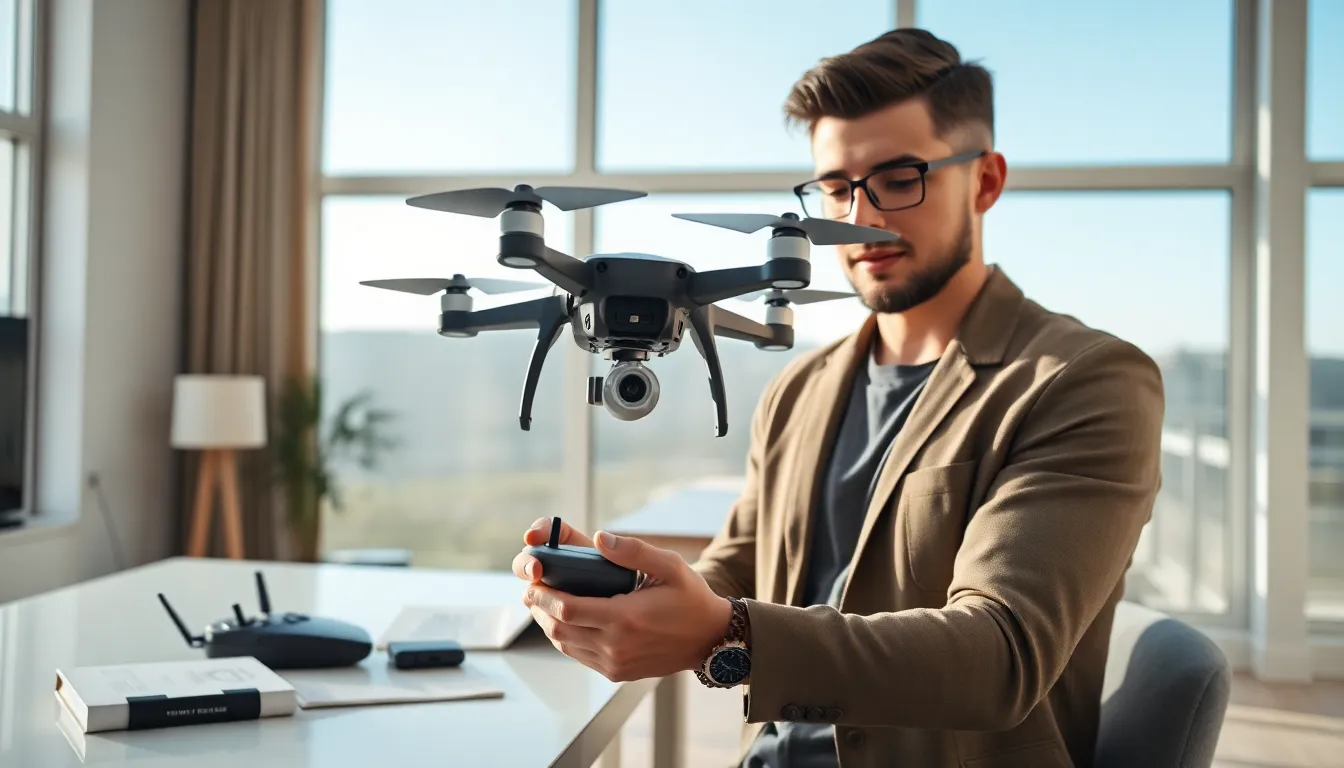
Drones for beginners can seem overwhelming at first. Dozens of models, technical specs, and flight modes crowd the market. But here’s the good news: getting started is simpler than most people think.
This guide breaks down everything a first-time flyer needs to know. Readers will learn how drones work, which types suit beginners best, and what features actually matter. They’ll also find practical flying tips and a clear overview of drone laws. By the end, anyone curious about drones for beginners will have a solid foundation to make their first purchase and take to the skies with confidence.
Table of Contents
ToggleKey Takeaways
- Drones for beginners work best when they include safety features like altitude hold, headless mode, and return-to-home functionality.
- Mid-range camera drones ($100–$300) offer the ideal balance of features and ease of use for first-time flyers.
- Master hovering and use beginner mode before attempting complex maneuvers to build essential flying skills.
- In the U.S., drones over 0.55 pounds must be FAA-registered, and pilots must follow recreational flyer rules including staying below 400 feet.
- Practice frequently in open spaces and consider using drone simulators to improve skills without risking crashes.
- Always check local laws and airspace restrictions before flying, as regulations vary by location.
What Is a Drone and How Does It Work
A drone is an unmanned aerial vehicle (UAV) controlled remotely or through onboard computers. Most consumer drones use four rotors, which is why they’re often called quadcopters. These rotors spin at different speeds to control movement.
Here’s the basic breakdown:
- Rotors and motors generate lift and allow the drone to hover, climb, or descend
- A flight controller acts as the brain, processing inputs and adjusting motor speeds
- Sensors like gyroscopes and accelerometers help maintain stability
- A transmitter (remote controller) sends commands to the drone
- A battery powers the entire system
When a pilot pushes the joystick forward, the flight controller tells the rear motors to spin faster. This tilts the drone and moves it forward. The same logic applies to turning left, right, or hovering in place.
Modern drones for beginners often include GPS modules. GPS allows features like auto-return home, where the drone flies back to its launch point if it loses signal. Many also have cameras mounted on gimbals, which keep footage stable even during movement.
Understanding these components helps new pilots troubleshoot issues and choose better equipment. It also removes some of the mystery, drones aren’t magic, just clever engineering.
Types of Beginner-Friendly Drones
Not all drones suit first-time flyers. Some are too fast. Others lack safety features. The best drones for beginners balance ease of use, durability, and price.
Toy Drones ($20–$50)
These small, lightweight drones are perfect for indoor practice. They’re cheap enough that crashes don’t hurt the wallet. Most lack cameras or advanced features, but they teach basic controls. Popular options include the Holy Stone HS210 and Potensic A20.
Camera Drones ($100–$300)
This category offers a big step up. Drones like the DJI Mini 4K or Holy Stone HS720 include HD cameras and longer flight times. They’re still manageable for beginners but capable of real aerial photography.
FPV (First-Person View) Drones
FPV drones transmit live video to goggles or a screen. Flying feels immersive, almost like being in the cockpit. But, FPV drones demand more skill. Beginners might want to master basic flying before jumping into FPV.
Racing Drones
These are built for speed and agility. They’re not ideal for beginners. The learning curve is steep, and crashes at high speed get expensive fast.
For most newcomers, a mid-range camera drone offers the best experience. It provides enough features to stay interesting without overwhelming the pilot.
Key Features to Look for in Your First Drone
Shopping for drones for beginners means knowing which features actually matter. Marketing hype can distract from what helps new pilots succeed.
Flight Time
Most beginner drones offer 10–30 minutes per battery. Longer is better, but extra batteries solve this problem cheaply. Look for drones with swappable batteries.
Altitude Hold
This feature maintains a set height automatically. Without it, drones drift up or down constantly. Altitude hold lets beginners focus on direction without fighting gravity.
Headless Mode
Normally, “forward” means the direction the drone faces. In headless mode, “forward” matches the controller’s orientation. This removes a major source of confusion for new pilots.
Return-to-Home (RTH)
GPS-enabled drones can fly back to their launch point automatically. If a beginner loses sight of their drone or the battery runs low, RTH prevents loss.
Propeller Guards
Plastic guards around the propellers protect both the drone and anything it hits. Beginners crash. It’s part of learning. Propeller guards reduce damage.
Camera Quality
A 1080p camera satisfies most beginners. 4K is nice but increases cost. Gimbals matter too, they stabilize footage and make a bigger difference than resolution.
Durability
Lightweight, flexible frames survive crashes better than rigid ones. Check reviews for durability feedback before buying.
Prioritize safety features and ease of use over flashy specs. A drone that helps someone learn beats one that frustrates them into quitting.
Essential Tips for Learning to Fly
Buying a drone is step one. Learning to fly it well takes practice and patience. These tips help beginners build skills faster.
Start Indoors or in Open Spaces
A large, empty field works best for outdoor practice. No trees, power lines, or crowds. For small toy drones, an open room with high ceilings does the job.
Master Hovering First
Before flying around, practice holding the drone steady at one height. This teaches throttle control. Most beginners overcorrect at first. Gentle, small movements work better.
Fly in Beginner Mode
Many drones for beginners include speed-limited modes. These reduce responsiveness, which sounds bad but actually helps. Slower reactions give new pilots time to think.
Keep the Drone in Front
When the drone faces away, controls feel intuitive. When it faces the pilot, left becomes right. This confuses everyone initially. Keeping the drone ahead simplifies things.
Practice Figure Eights
Once hovering feels natural, try flying figure eights. This exercise combines turns, forward motion, and altitude control. It builds muscle memory quickly.
Use a Simulator
Drone simulators let pilots practice without risking real equipment. Apps like Liftoff or DJI Virtual Flight offer realistic physics. Crashing in a simulator costs nothing.
Fly Frequently
Skills fade without practice. Short, regular sessions beat occasional long ones. Even 15 minutes a few times a week helps.
Patience matters. Everyone crashes at first. The goal isn’t perfection, it’s gradual improvement.
Understanding Drone Laws and Safety Rules
Flying drones comes with legal responsibilities. Ignoring rules can lead to fines, confiscation, or worse. Beginners should understand regulations before their first flight.
FAA Registration
In the United States, drones weighing over 0.55 pounds (250 grams) must register with the FAA. Registration costs $5 and lasts three years. The registration number must appear on the drone.
Recreational Flyer Rules
The FAA requires recreational pilots to:
- Keep the drone within visual line of sight
- Fly below 400 feet in uncontrolled airspace
- Never fly near other aircraft or over people
- Avoid restricted areas like airports, stadiums, and military bases
- Follow community-based safety guidelines
LAANC Authorization
Some areas require special permission through the Low Altitude Authorization and Notification Capability (LAANC) system. Apps like B4UFLY help pilots check airspace restrictions.
Local Laws Vary
States, cities, and parks often add their own rules. Some parks ban drones entirely. Others require permits. Always check local regulations before flying somewhere new.
Privacy Concerns
Flying over private property or recording people without consent creates legal and ethical problems. Responsible pilots respect others’ privacy.
Safety Best Practices
- Check weather conditions before flying
- Inspect the drone for damage before each flight
- Keep spare batteries charged
- Never fly under the influence of alcohol or drugs
Following rules protects the pilot, bystanders, and the broader drone community. Irresponsible flying leads to stricter regulations for everyone.


