
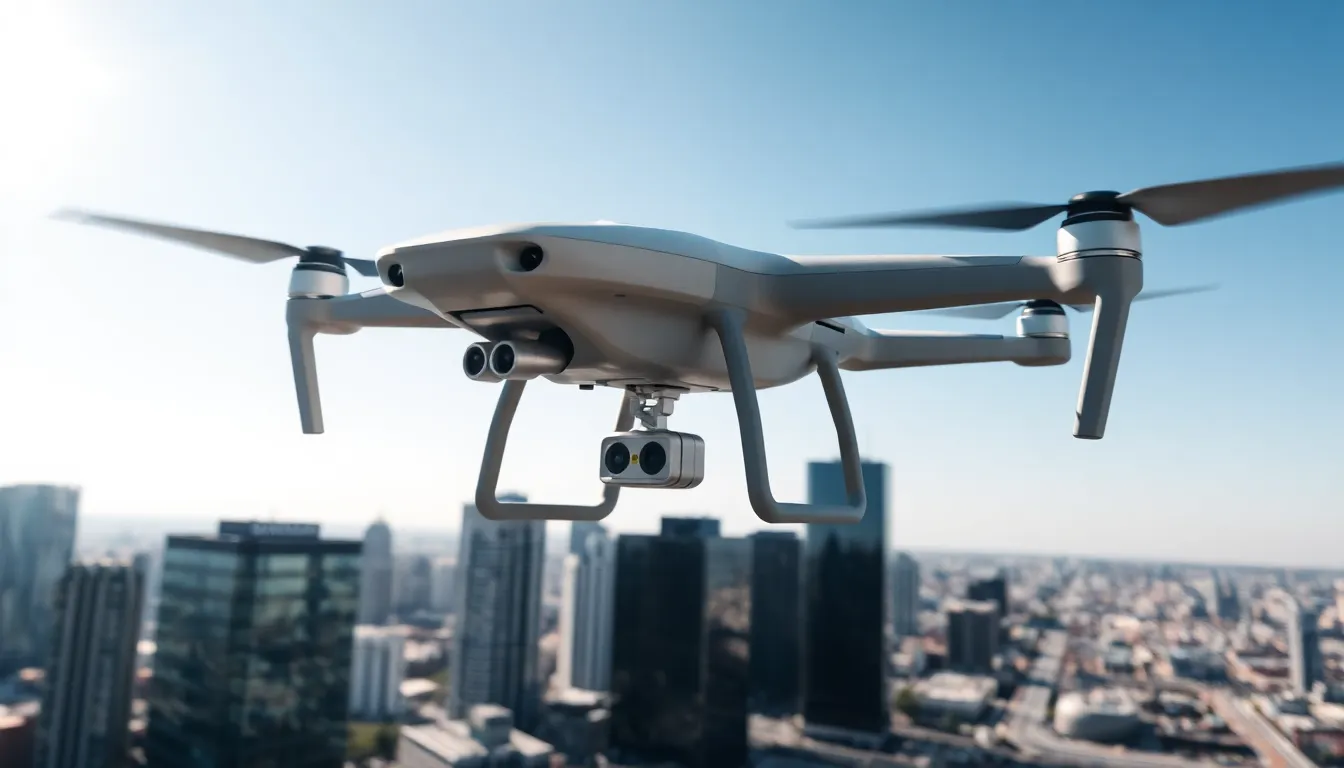
Drone trends 2026 point to a year of significant change. The industry is moving fast, driven by advances in artificial intelligence, new commercial use cases, and shifting regulations. By the end of 2026, drones will play a bigger role in everyday life and business operations than ever before.
This article breaks down the key drone trends 2026 will bring. From smarter flight systems to greener propulsion, these developments will shape how companies, governments, and consumers interact with unmanned aerial vehicles. Here’s what to watch for.
Table of Contents
ToggleKey Takeaways
- Drone trends 2026 highlight AI-powered autonomy as the new standard, enabling real-time decision-making and reducing human error.
- Commercial drone applications are expanding rapidly across delivery, agriculture, construction, and public safety sectors.
- Regulatory changes, including Remote ID compliance and BVLOS frameworks, will shape how operators fly drones in 2026.
- Solid-state batteries and hydrogen fuel cells are driving sustainability advances, offering longer flight times and zero emissions.
- Swarm technology allows multiple drones to coordinate tasks, benefiting agriculture, entertainment, and large-scale operations.
- Noise reduction and recyclable materials reflect the industry’s growing focus on environmental responsibility and community acceptance.
AI-Powered Autonomy and Smarter Flight Systems
Artificial intelligence is transforming how drones operate. In 2026, AI-powered autonomy will become standard across most commercial and consumer models. This means drones will make real-time decisions without constant human input.
Smart flight systems now use machine learning to detect obstacles, adjust routes, and respond to changing conditions. A drone inspecting a wind turbine, for example, can identify damage and flag it for review, all without a pilot guiding each movement. This level of independence saves time and reduces the risk of human error.
Computer vision is another area seeing rapid growth. Drones equipped with advanced cameras and sensors can now recognize objects, track movement, and analyze environments on the fly. Warehouse operators use this technology for inventory counts. Search and rescue teams use it to locate missing persons in dense forests or disaster zones.
Swarm technology is also gaining traction as part of drone trends 2026. Multiple drones can now coordinate their actions, sharing data and dividing tasks. Agricultural operations use swarms to cover large fields quickly, while entertainment companies deploy them for synchronized light shows.
The push toward greater autonomy raises questions about safety and accountability. Manufacturers are addressing these concerns by building in fail-safes and redundant systems. If one component fails, the drone can still land safely. These improvements make AI-driven drones more reliable and appealing to buyers.
Expanding Commercial Applications Across Industries
Commercial drone use is expanding into new sectors. The drone trends 2026 outlook shows growth in delivery, agriculture, construction, and public safety.
Retail giants and logistics companies are scaling up drone delivery programs. Amazon, Walmart, and smaller startups are testing or launching services that drop packages at customers’ doors within hours. Rural areas stand to benefit most, where traditional delivery routes are slow and expensive.
Agriculture remains one of the largest markets for commercial drones. Farmers use them to monitor crop health, spray pesticides, and map fields. Precision agriculture relies on data collected by drones to reduce waste and increase yields. In 2026, expect more integration between drone data and farm management software.
Construction and infrastructure inspection are also major growth areas. Drones survey job sites, track progress, and inspect hard-to-reach structures like bridges and cell towers. This cuts labor costs and keeps workers out of dangerous situations. Insurance companies now use drone footage to assess damage after storms or accidents.
Public safety agencies are adopting drones at a rapid pace. Police departments deploy them for crowd monitoring and accident reconstruction. Fire departments use thermal imaging drones to find hotspots during wildfires. Emergency responders deliver medical supplies to remote locations.
These commercial applications of drone trends 2026 reflect a broader shift. Drones are no longer toys or niche tools. They are essential equipment for businesses across dozens of industries.
Evolving Regulations and Airspace Integration
Regulation is catching up with technology. Governments around the world are updating drone rules to address new use cases and safety concerns. The drone trends 2026 landscape will be shaped by these policy changes.
In the United States, the Federal Aviation Administration (FAA) continues to refine its Remote ID requirements. Remote ID acts like a digital license plate, broadcasting a drone’s identity and location. Full compliance deadlines are pushing operators to upgrade their equipment.
Beyond Visual Line of Sight (BVLOS) operations are a hot topic. Current rules require pilots to keep drones within their direct view. But delivery services and large-scale inspections need BVLOS approval to be practical. The FAA and European Union Aviation Safety Agency (EASA) are both developing frameworks to allow expanded BVLOS flights with proper safeguards.
Airspace integration is another challenge. Drones share the sky with manned aircraft, and near-misses have raised alarms. Unmanned Traffic Management (UTM) systems aim to solve this problem. These platforms track drone positions and coordinate movements to prevent collisions. Several countries are piloting UTM systems in urban areas.
Privacy concerns also influence regulation. Drones equipped with cameras can capture footage of private property without consent. Lawmakers in multiple states have introduced bills restricting drone surveillance. Operators must stay informed about local rules to avoid fines or legal action.
International standards are slowly aligning. The International Civil Aviation Organization (ICAO) is working on global guidelines. Consistent rules would make it easier for manufacturers and operators to work across borders. Drone trends 2026 will likely include progress on this front, though full harmonization may take longer.
Sustainability and Electric Propulsion Advances
Sustainability is a growing priority in the drone industry. Drone trends 2026 include a clear push toward cleaner, more efficient technology.
Battery improvements are at the center of this shift. Lithium-ion batteries have dominated for years, but solid-state batteries are entering the market. These offer higher energy density, faster charging, and longer lifespan. Drones powered by solid-state batteries can fly farther and stay airborne longer.
Hydrogen fuel cells represent another option. Several companies are testing hydrogen-powered drones for long-range deliveries and industrial inspections. Hydrogen produces zero emissions at the point of use, making it attractive for environmentally conscious buyers. The main hurdle is infrastructure, hydrogen refueling stations are still rare.
Solar-assisted drones are also gaining attention. Some models use solar panels to extend flight time or trickle-charge batteries during operation. High-altitude pseudo-satellites (HAPS) rely on solar power to stay aloft for weeks, providing internet coverage or surveillance over large areas.
Manufacturers are looking at the full lifecycle of their products. Recyclable materials, modular designs, and take-back programs reduce waste. Consumers and businesses are paying more attention to environmental impact when choosing drone suppliers.
Noise reduction is part of the sustainability conversation too. Electric motors are quieter than combustion engines, but propeller design matters. New blade shapes and shrouds cut noise levels, making drones more acceptable in residential areas. Delivery services especially need quieter drones to avoid community backlash.
These advances in sustainable technology reflect broader trends. Buyers want products that perform well and align with their values. Drone trends 2026 show that the industry is responding.


