
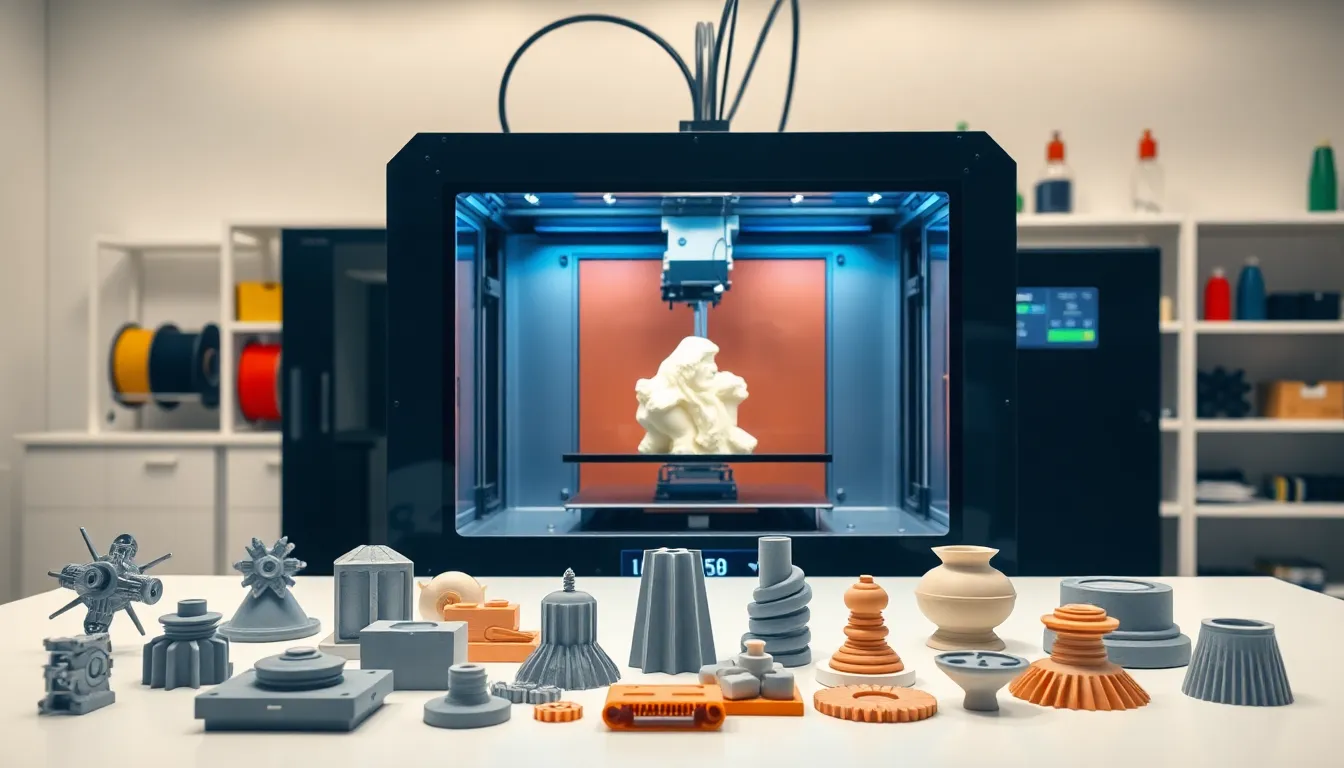
Top 3D printing has evolved from a niche hobby into a mainstream manufacturing force. In 2025, businesses and hobbyists alike rely on 3D printing to create everything from medical implants to custom toys. The technology works by building objects layer by layer from digital files. This process eliminates much of the waste found in traditional manufacturing.
Whether someone wants to prototype a product idea or produce end-use parts, 3D printing offers speed and flexibility that conventional methods can’t match. This guide covers the leading 3D printing technologies, their real-world applications, and practical advice for anyone ready to start printing.
Table of Contents
ToggleKey Takeaways
- Top 3D printing technologies include FDM for affordability, SLA for precision, and SLS/MJF for industrial-strength applications.
- Industries like healthcare, aerospace, and consumer products use 3D printing to create custom solutions faster and more cost-effectively than traditional methods.
- When choosing a 3D printer, prioritize build volume, print resolution, material compatibility, and reliability based on your specific project needs.
- Beginners should start with simple prints, master bed adhesion techniques, and learn slicing software settings to avoid common failures.
- Proper filament storage and regular printer maintenance are essential for consistent, high-quality 3D printing results.
- Active online communities provide valuable support for troubleshooting and improving your 3D printing skills.
Understanding the Main Types of 3D Printing
Several 3D printing technologies exist today, and each serves different purposes. Here’s a breakdown of the most common methods.
Fused Deposition Modeling (FDM)
FDM remains the most popular top 3D printing method for beginners and professionals. A heated nozzle melts plastic filament and deposits it layer by layer. FDM printers are affordable, easy to maintain, and work with materials like PLA, ABS, and PETG. They’re ideal for prototypes, functional parts, and educational projects.
Stereolithography (SLA)
SLA uses a UV laser to cure liquid resin into solid objects. This method produces parts with smooth surfaces and fine details. Jewelers, dentists, and product designers favor SLA for its precision. The trade-off? Resin can be messy, and the printers require more post-processing.
Selective Laser Sintering (SLS)
SLS fuses powdered materials, usually nylon, using a high-powered laser. This top 3D printing technique creates strong, durable parts without support structures. Aerospace and automotive companies use SLS for functional prototypes and low-volume production runs.
Multi Jet Fusion (MJF)
HP developed MJF technology for industrial applications. It spreads powder across a build platform and applies fusing agents before heat bonds the layers. MJF delivers excellent mechanical properties and faster print speeds than SLS. Manufacturers producing end-use parts often choose this method.
Each technology has strengths. FDM wins on cost and accessibility. SLA excels at detail. SLS and MJF handle demanding industrial applications. The best choice depends on budget, material needs, and the intended use of printed objects.
Best 3D Printing Applications Across Industries
Top 3D printing has found its way into nearly every industry. Here are the sectors seeing the biggest impact.
Healthcare and Medical Devices
Hospitals use 3D printing to create patient-specific surgical guides and anatomical models. Surgeons practice complicated procedures on printed replicas before operating. Dental labs produce crowns, aligners, and dentures faster than ever. Some companies now print prosthetic limbs at a fraction of traditional costs.
Aerospace and Automotive
Weight reduction matters in aerospace. Engineers print lightweight brackets, ducts, and interior components that maintain strength while cutting mass. Car manufacturers prototype new designs in days instead of weeks. Racing teams print custom parts on-site during competitions.
Consumer Products
Top 3D printing enables mass customization. Companies sell personalized phone cases, jewelry, and home décor. Eyewear brands offer custom-fitted frames. Sporting goods manufacturers create shoes and equipment matched to individual athletes.
Education and Research
Schools use 3D printers to teach design thinking and engineering concepts. Students build projects that would be impossible with traditional tools. Universities research new materials and printing methods. The technology makes abstract ideas tangible.
Architecture and Construction
Architects print detailed scale models to show clients. Some construction companies experiment with printing entire building components. Concrete 3D printing has produced homes in under 24 hours. This application could address housing shortages in the coming years.
What to Look for in a Quality 3D Printer
Buying a 3D printer requires careful consideration. Not all machines deliver the same results. Here’s what matters most.
Build Volume determines the maximum size of printed objects. Larger volumes offer more flexibility but increase cost. Consider what projects are planned before choosing.
Print Resolution affects surface quality and detail. Lower layer heights produce smoother finishes but extend print times. Top 3D printing machines balance speed and resolution well.
Material Compatibility varies by printer type. FDM machines handle dozens of filament types. SLA printers require specific resins. Check that a printer supports the materials needed for planned applications.
Reliability saves time and money. Consistent printers require less supervision and produce fewer failed prints. Read reviews and look for machines with proven track records.
Software and Connectivity influence the user experience. Good slicing software makes preparation simple. Wi-Fi connectivity and remote monitoring add convenience.
Support and Community help users troubleshoot problems. Established brands typically offer better customer service. Active online communities share tips and modifications.
Tips for Getting Started With 3D Printing
New users can avoid common frustrations by following a few guidelines.
Start with simple projects. Print calibration cubes and basic shapes before attempting complex models. This builds familiarity with the printer and its settings.
Learn proper bed adhesion techniques. Most print failures happen because the first layer doesn’t stick. Clean the build surface regularly. Use appropriate adhesion aids like glue sticks or textured sheets.
Understand slicing settings. The slicer software controls layer height, infill percentage, print speed, and support structures. Small changes produce big differences in print quality. Experiment with one variable at a time.
Store materials correctly. Moisture degrades most 3D printing filaments and resins. Keep materials in sealed containers with desiccant packs. Dry filament before printing if it has absorbed humidity.
Join online communities. Reddit, Discord servers, and manufacturer forums offer troubleshooting help. Experienced users share profiles, modifications, and design files. Top 3D printing enthusiasts are generally eager to help newcomers.
Maintain the printer regularly. Clean nozzles, lubricate rails, and check belt tension. Preventive maintenance reduces failed prints and extends machine life.


