
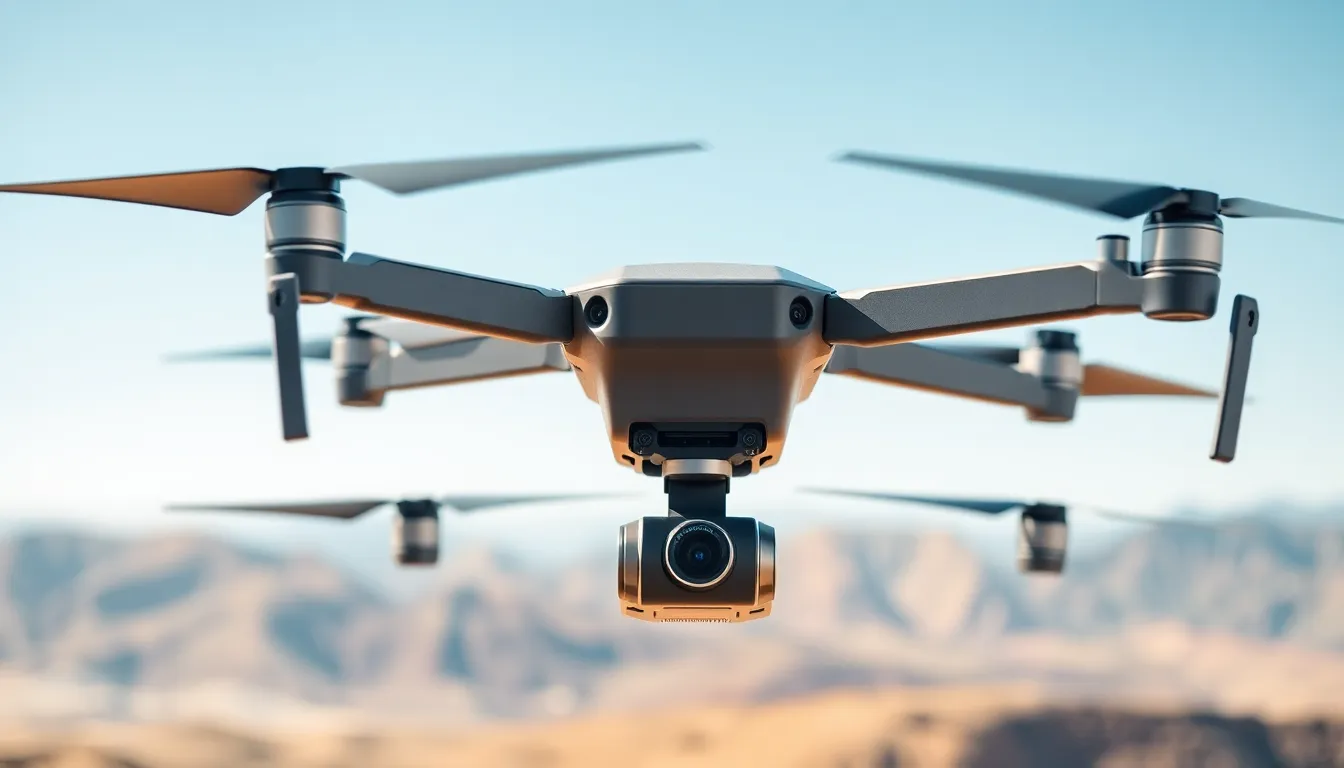
Top drones in 2025 offer better cameras, longer flight times, and smarter features than ever before. Whether someone wants to capture stunning aerial footage, learn to fly, or run a commercial operation, there’s a drone built for the job. This guide breaks down the best options across categories, photography, beginner-friendly models, and professional-grade machines. By the end, buyers will know exactly which drone fits their needs and budget.
Table of Contents
ToggleKey Takeaways
- Top drones in 2025 offer flight times up to 55 minutes, 8K video capabilities, and omnidirectional obstacle avoidance for safer flying.
- When choosing a drone, prioritize camera quality, flight time, obstacle sensors, portability, and GPS smart features based on your specific needs.
- The DJI Mavic 3 Pro and Autel Evo II Pro lead the market for aerial photography with professional-grade sensors and extended flight times.
- Beginners should start with models like the DJI Mini 4 Pro or DJI Neo, which feature safety sensors, easy controls, and forgiving flight characteristics.
- Professional filmmakers and commercial operators benefit from top drones like the DJI Inspire 3 for cinema-quality 8K footage or the Matrice 350 RTK for industrial applications.
- Budget-friendly options like the Holy Stone HS720G prove you don’t need to spend a fortune to get GPS, 4K video, and reliable performance.
What to Look for When Choosing a Drone
Buying a drone involves more than picking a popular brand. Several key factors determine whether a drone will meet specific needs.
Camera Quality
Camera resolution matters most for photographers and videographers. Top drones now feature 4K or even 8K video recording. Sensor size also affects image quality, larger sensors capture more light and detail. Look for drones with adjustable aperture settings for greater creative control.
Flight Time and Range
Battery life varies significantly across models. Entry-level drones often fly for 15-20 minutes per charge. High-end drones can stay airborne for 40+ minutes. Range determines how far the drone can travel from the controller. Most consumer drones offer 5-10 km of range, while professional models push beyond 15 km.
Obstacle Avoidance
Sensors help drones detect and avoid trees, buildings, and other obstacles. Basic models include front-facing sensors only. Premium drones feature omnidirectional obstacle detection with sensors on all sides. This technology prevents crashes and protects the investment.
Portability
Foldable designs make drones easier to transport. Compact drones fit in backpacks and travel bags without hassle. Heavier professional drones require dedicated carrying cases. Weight restrictions also matter for travelers since some airlines limit drone equipment.
GPS and Smart Features
GPS enables automatic return-to-home functions. If a drone loses signal or runs low on battery, it flies back to its takeoff point. Smart features like subject tracking, waypoint navigation, and automated flight modes simplify operation. These tools help beginners capture professional-looking footage quickly.
Best Drones for Aerial Photography
Photographers and content creators need top drones with exceptional camera systems. These models deliver stunning results.
DJI Mavic 3 Pro
The Mavic 3 Pro remains a favorite among aerial photographers. It features a triple-camera system with a Hasselblad main sensor. The 4/3 CMOS sensor captures 20MP photos and 5.1K video. Flight time reaches 43 minutes, one of the longest in its class. The drone weighs 958g and folds for easy transport.
DJI Air 3
The Air 3 offers excellent value for serious hobbyists. Its dual-camera setup includes wide-angle and telephoto lenses. Users can switch between 24mm and 70mm focal lengths mid-flight. The 48MP sensor produces sharp images in various lighting conditions. Battery life hits 46 minutes, and the price sits below the Mavic 3 Pro.
Autel Evo II Pro
Autel’s flagship drone competes directly with DJI’s top drones. The 1-inch sensor captures 6K video and 20MP stills. It features adjustable aperture from f/2.8 to f/11. The Evo II Pro offers 42 minutes of flight time and 9 km of transmission range. Omnidirectional obstacle avoidance keeps the drone safe during complex shots.
These photography-focused drones deliver professional results. They handle everything from landscape shots to action sequences with ease.
Best Drones for Beginners
New pilots need forgiving drones that are easy to fly and hard to crash. These beginner-friendly options check all the boxes.
DJI Mini 4 Pro
The Mini 4 Pro packs advanced features into a tiny package. It weighs under 249g, which exempts it from registration requirements in many countries. Even though its size, it shoots 4K video and 48MP photos. Obstacle sensors on all sides protect new pilots from mistakes. Flight time reaches 34 minutes, impressive for a mini drone.
DJI Neo
DJI’s Neo targets absolute beginners. This palm-sized drone launches from the hand without a controller. It uses gesture controls and smartphone connectivity. The Neo captures 4K video and follows subjects automatically. Battery life is limited to about 18 minutes, but the low price makes it an excellent starting point.
Holy Stone HS720G
Budget-conscious beginners should consider the HS720G. It costs a fraction of DJI models while offering GPS, 4K camera, and 26 minutes of flight time. The brushless motors provide smooth operation. One-key return and altitude hold features simplify flying. This drone proves that quality doesn’t always require a premium price.
Top drones for beginners prioritize stability and safety features. New pilots can focus on learning rather than worrying about crashes.
Best Drones for Professional Use
Commercial operators and filmmakers require top drones built for demanding work. These professional-grade machines deliver results.
DJI Inspire 3
The Inspire 3 sets the standard for cinema-quality aerial footage. Its full-frame 8K camera captures incredible detail. The gimbal rotates 360 degrees for unlimited shooting angles. Dual operators can control flight and camera independently. This drone costs significantly more than consumer models, but it delivers broadcast-ready footage.
DJI Matrice 350 RTK
Industrial applications demand the Matrice 350 RTK. It supports multiple payload options including thermal cameras, LiDAR sensors, and surveying equipment. The IP55 rating means it operates in rain and dust. Flight time extends to 55 minutes with standard payloads. Enterprise users rely on this drone for inspections, mapping, and search-and-rescue operations.
Freefly Astro
The Astro offers an alternative to DJI’s professional lineup. It carries cinema cameras like the RED Komodo. The modular design allows customization for specific shooting needs. Open-source software appeals to operators who want full control over their equipment. This drone suits high-end productions requiring specialized camera systems.
Professional drones represent serious investments. They deliver capabilities that consumer models simply cannot match.


