
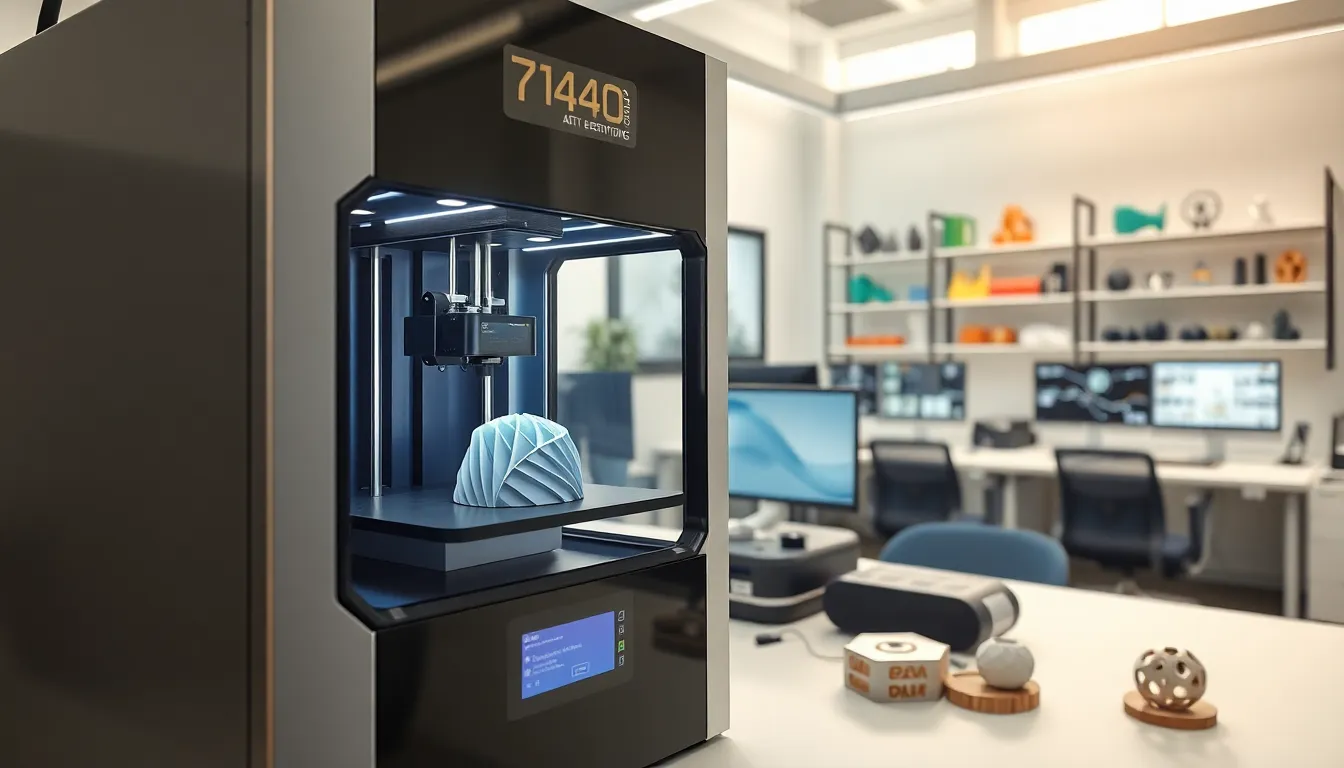
3D printing transforms digital designs into physical objects layer by layer. This technology has changed how manufacturers, hobbyists, and medical professionals create products. From custom prosthetics to aerospace parts, 3D printing makes production faster and more accessible than traditional methods.
This guide explains how 3D printing works, the different technologies available, and where people use it most. Whether someone wants to start a new hobby or understand industrial applications, this article covers the fundamentals of 3D printing in plain terms.
Table of Contents
ToggleKey Takeaways
- 3D printing builds physical objects layer by layer from digital designs, making production faster and more accessible than traditional manufacturing.
- FDM, SLA, SLS, and DMLS are the main 3D printing technologies, each suited for different budgets, materials, and precision needs.
- Common materials for 3D printing include plastics (PLA, ABS, PETG), resins, metals, and composites—each offering unique properties for specific applications.
- Industries like healthcare, aerospace, automotive, and education rely on 3D printing for rapid prototyping, custom parts, and cost-effective production.
- While 3D printing excels in design freedom and customization, it has limitations in speed, material strength, and cost-effectiveness for mass production.
- Beginners can start with affordable FDM printers ($200–$5,000), while industrial applications may require specialized machines costing tens of thousands of dollars.
How 3D Printing Works
3D printing builds objects by adding material one layer at a time. This process starts with a digital file, usually created in CAD (computer-aided design) software or downloaded from online repositories.
The printer reads this file and slices it into hundreds or thousands of horizontal layers. Each layer can be thinner than a human hair. The machine then deposits or solidifies material according to these instructions, stacking layers until the object is complete.
Most 3D printers follow these basic steps:
- Design creation – A user creates or downloads a 3D model file (typically STL or OBJ format)
- Slicing – Software converts the model into printer instructions (G-code)
- Printing – The machine builds the object layer by layer
- Post-processing – The user removes supports, sands surfaces, or applies finishes
Print times vary widely. A small keychain might take 30 minutes. A detailed figurine could take 12 hours. Large industrial parts sometimes require days of continuous 3D printing.
The precision of 3D printing depends on layer height and printer quality. Consumer printers typically achieve layer heights of 0.1mm to 0.3mm. Industrial machines can print layers as thin as 0.016mm.
Common Types of 3D Printing Technology
Several 3D printing technologies exist, each with distinct advantages. The right choice depends on material requirements, budget, and intended use.
Fused Deposition Modeling (FDM)
FDM is the most common type of 3D printing for beginners and hobbyists. It melts plastic filament and extrudes it through a heated nozzle. The material cools and hardens as each layer is deposited.
FDM printers cost between $200 and $5,000 for consumer models. They work well for prototypes, functional parts, and decorative items.
Stereolithography (SLA)
SLA uses a UV laser to cure liquid resin into solid plastic. This 3D printing method produces smoother surfaces and finer details than FDM. Jewelers, dentists, and miniature enthusiasts often prefer SLA for its precision.
The tradeoff? Resin costs more than filament, and printed parts need washing and additional UV curing.
Selective Laser Sintering (SLS)
SLS fuses powdered material, usually nylon, with a high-powered laser. This technology creates strong, functional parts without support structures. The surrounding powder supports the object during 3D printing.
SLS machines cost tens of thousands of dollars, making them primarily an industrial option.
Direct Metal Laser Sintering (DMLS)
DMLS applies laser sintering principles to metal powders. Aerospace and medical industries use this 3D printing technology for titanium implants, engine components, and specialized tools.
Materials Used in 3D Printing
3D printing supports an expanding range of materials. Each offers different properties for specific applications.
Plastics remain the most popular choice for 3D printing. PLA (polylactic acid) is beginner-friendly and biodegradable. ABS offers greater durability and heat resistance. PETG combines strength with flexibility.
Resins provide exceptional detail for jewelry, dental models, and figurines. Standard resins are brittle, but flexible and tough variants exist for functional parts.
Metals include stainless steel, aluminum, titanium, and gold. Metal 3D printing serves aerospace, medical, and jewelry industries where strength and precision matter.
Composites blend plastics with carbon fiber, glass fiber, or wood particles. These materials add stiffness or aesthetic qualities to printed objects.
Specialty materials have emerged for specific uses:
- Food-safe materials for kitchen items
- Flexible TPU for phone cases and gaskets
- High-temperature plastics for automotive parts
- Ceramic materials for art and industrial applications
Material selection directly affects what 3D printing can achieve. A prototype might use cheap PLA. A replacement gear for machinery needs something tougher like nylon or ABS.
Popular Applications of 3D Printing
3D printing has found uses across nearly every industry. Some applications have become standard practice.
Manufacturing and Prototyping
Companies use 3D printing to create prototypes in hours instead of weeks. Engineers can test designs, make adjustments, and print again, all before committing to expensive tooling. This rapid iteration saves time and money.
Medical and Dental
Hospitals print custom surgical guides, prosthetics, and anatomical models for pre-operative planning. Dental labs produce crowns, aligners, and implants with 3D printing. Some researchers are even developing bioprinting techniques for tissue and organ creation.
Aerospace and Automotive
Airlines print lightweight replacement parts on demand. SpaceX and other aerospace companies use 3D printing for rocket engine components. Automakers prototype new designs and create custom tooling.
Consumer Products
Hobbyists print everything from phone stands to cosplay armor. Artists create sculptures impossible to make with traditional methods. Small businesses sell custom products without inventory overhead.
Education
Schools use 3D printing to teach design thinking and engineering concepts. Students can hold their ideas in their hands, which reinforces learning.
Architecture
Firms print scale models of buildings and even experimental full-size structures. Some companies have printed entire homes using concrete 3D printing technology.
Benefits and Limitations of 3D Printing
3D printing offers clear advantages, but it isn’t the right solution for every situation. Understanding both sides helps set realistic expectations.
Benefits
Design freedom – 3D printing creates geometries impossible with traditional manufacturing. Internal channels, lattice structures, and organic shapes become practical.
Rapid prototyping – Designers can go from concept to physical part in hours. This speed accelerates product development dramatically.
Customization – Each print can be unique without additional cost. Medical devices, dental appliances, and consumer products benefit from this capability.
Reduced waste – Additive manufacturing uses only needed material. Subtractive methods like CNC machining cut away excess, creating waste.
On-demand production – Companies can print parts as needed instead of maintaining large inventories. This reduces storage costs and obsolescence risk.
Limitations
Speed – 3D printing is slow compared to injection molding for mass production. Printing 1,000 identical parts takes far longer than molding them.
Material properties – Printed parts often have weaker layer adhesion than traditionally manufactured components. Anisotropic strength can be a concern for structural applications.
Surface finish – Layer lines are visible on most 3D printing technologies. Post-processing adds time and labor.
Size constraints – Print volume limits object size. Large items must be printed in sections and assembled.
Cost at scale – Per-unit costs remain constant with 3D printing. Traditional manufacturing becomes cheaper as quantities increase.


