
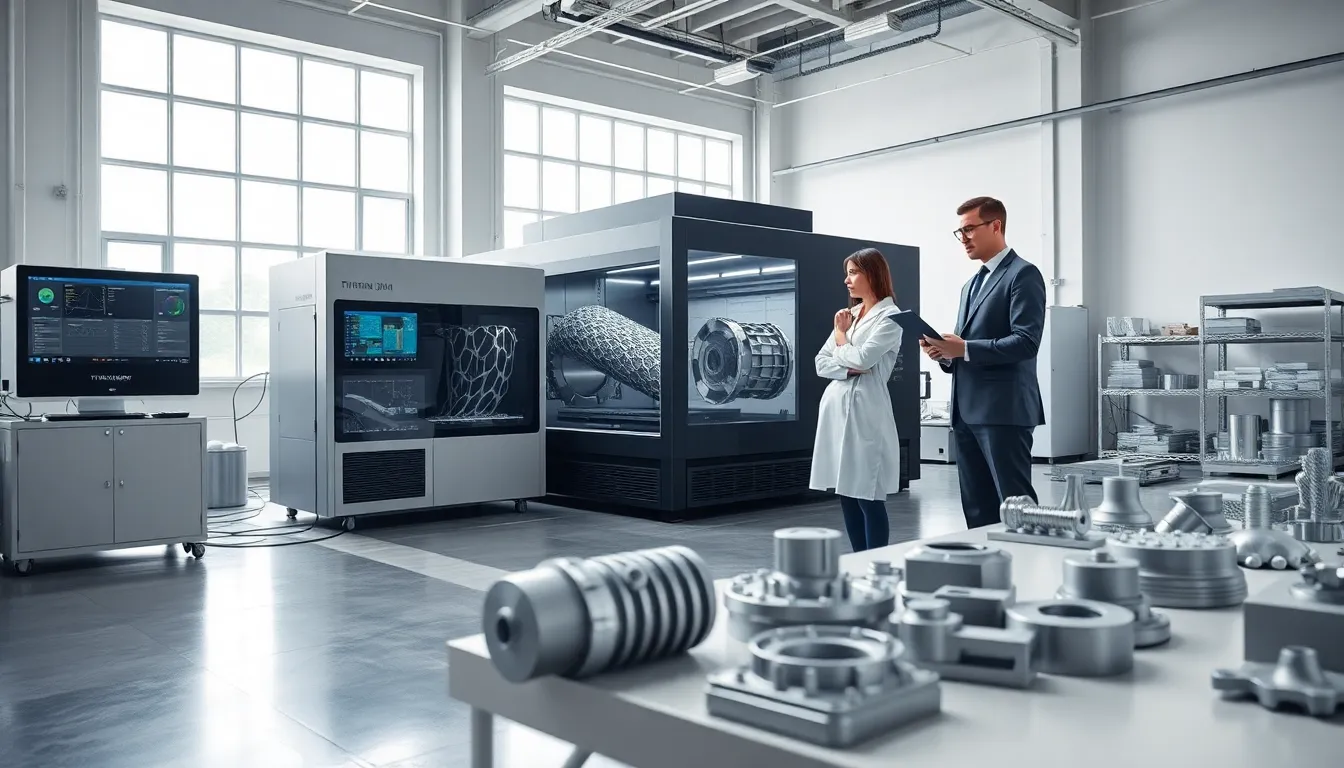
3D printing trends in 2026 are set to reshape manufacturing, healthcare, and construction. The industry has moved far beyond plastic prototypes. Today’s additive manufacturing produces everything from jet engine components to human tissue scaffolds. Companies worldwide are investing billions into this technology, and the results are starting to show.
What makes 2026 different? Speed, precision, and sustainability have all improved dramatically. New materials allow printers to create stronger, lighter, and more functional parts. Artificial intelligence now handles design optimization that once took engineers weeks. These shifts aren’t theoretical, they’re happening in factories and labs right now.
This article breaks down the most significant 3D printing trends shaping 2026. Each trend represents a practical shift that businesses and consumers will experience firsthand.
Table of Contents
ToggleKey Takeaways
- 3D printing trends in 2026 are transforming industries with faster speeds, better precision, and more sustainable practices across manufacturing, healthcare, and construction.
- Multi-material and metal printing now combine plastics, metals, and ceramics in single builds, with metal printer costs dropping from $1 million to under $300,000.
- AI-driven generative design creates optimized parts 40% lighter than traditional versions while maintaining strength, reducing design time from weeks to hours.
- Sustainable 3D printing has advanced with bio-based plastics, closed-loop recycling programs, and energy-efficient systems using 40% less power.
- Healthcare applications include patient-specific implants, same-day dental crowns, and personalized medication dosing through pharmaceutical 3D printing.
- Construction 3D printing builds entire homes in under 48 hours, cutting costs by 30-50% and addressing industry labor shortages.
Advancements in Multi-Material and Metal Printing
Multi-material 3D printing has reached a turning point in 2026. Printers can now combine plastics, metals, ceramics, and composites in a single build. This capability eliminates assembly steps and creates parts that were previously impossible to manufacture.
Metal 3D printing has seen the most dramatic improvements. New powder bed fusion systems achieve tolerances under 50 microns. That precision rivals traditional CNC machining but with far less material waste. Aerospace companies now print titanium brackets and steel components directly, skipping months of tooling development.
The cost equation has shifted too. Metal 3D printers that cost $1 million five years ago now sell for under $300,000. Desktop metal printers suitable for small businesses have dropped below $50,000. This price reduction opens additive manufacturing to companies that couldn’t justify the investment before.
Multi-material printing solves real engineering problems. A single printed part might include rigid structures, flexible joints, and conductive traces. Medical device makers use this approach to create implants with hard bone-facing surfaces and soft tissue interfaces. Electronics manufacturers print circuit boards with embedded sensors and housings in one operation.
Binder jetting technology has accelerated metal production speeds by 10x compared to 2023 systems. Some industrial printers now produce hundreds of metal parts per day. This throughput makes 3D printing competitive with casting and forging for medium-volume production runs.
AI-Driven Design and Automation
Artificial intelligence has transformed how engineers approach 3D printing design. Generative design software now produces optimized geometries in hours rather than weeks. These AI systems analyze load requirements, material properties, and manufacturing constraints to create shapes no human would conceive.
The results look strange but perform exceptionally well. AI-designed brackets weigh 40% less than traditional versions while maintaining identical strength. Lattice structures generated by machine learning algorithms maximize stiffness-to-weight ratios with mathematical precision.
3D printing trends in 2026 show deep integration between AI and production systems. Smart printers monitor build quality in real-time using computer vision. When defects appear, the system adjusts laser power, layer thickness, or feed rates automatically. This closed-loop control reduces failed prints by up to 60%.
Predictive maintenance powered by AI keeps printers running longer. Sensors track vibration, temperature, and motor performance. Algorithms detect early warning signs of component failure before breakdowns occur. Manufacturers report 30% reductions in unplanned downtime after implementing these systems.
Design automation extends to entire product families. Engineers define performance requirements, and AI generates complete part catalogs optimized for 3D printing. What once required dedicated design teams now happens with minimal human intervention. This shift allows small companies to compete with larger firms that have bigger engineering departments.
Sustainability and Eco-Friendly Materials
Sustainability concerns are driving major 3D printing trends in 2026. The industry has responded with bio-based materials, recycling programs, and energy-efficient systems.
Plant-derived plastics now match petroleum-based materials in strength and durability. PLA (polylactic acid) from corn starch has been available for years, but newer bio-resins handle higher temperatures and greater stress. Hemp, algae, and wood fiber composites offer additional options for eco-conscious manufacturers.
Recycled materials have gained traction across the industry. Companies collect failed prints, support structures, and production waste. Processing facilities grind this material, filter contaminants, and produce fresh filament or powder. Some manufacturers now offer closed-loop programs that guarantee material recycling.
Metal 3D printing creates less waste than traditional manufacturing. Subtractive methods like milling cut away material to reveal a final shape, sometimes removing 90% of the original block. Additive processes build parts layer by layer, using only the material needed. This efficiency matters especially for expensive metals like titanium and nickel alloys.
Energy consumption has improved significantly. New laser systems use 40% less power than previous generations. Some printers incorporate solar panels and battery storage to reduce grid dependence. Carbon footprint calculations now appear in manufacturing software, helping companies track environmental impact alongside production costs.
Biodegradable support materials dissolve in water or compost naturally. This eliminates chemical removal processes and reduces hazardous waste.
Expanding Applications in Healthcare and Construction
Healthcare applications represent some of the most exciting 3D printing trends in 2026. Bioprinting has moved from research labs into clinical practice. Surgeons now implant 3D-printed bone grafts, cartilage patches, and skin substitutes.
Patient-specific implants have become standard for complex cases. CT scans feed directly into design software that creates perfect-fit hip joints, skull plates, and spinal cages. These custom devices reduce surgery time and improve patient outcomes compared to off-the-shelf alternatives.
Dental 3D printing has exploded in adoption. Orthodontists print clear aligners in their offices rather than outsourcing to laboratories. Same-day crowns and bridges eliminate multiple appointments. The technology cuts costs for practices and patients while improving convenience.
Pharmaceutical 3D printing allows personalized medication dosing. Printers produce pills with precise drug combinations and release profiles for individual patients. This approach helps people who need unusual dosages or multiple medications combined into single tablets.
Construction 3D printing has scaled up dramatically. Concrete printers now build entire homes in under 48 hours. Projects in Texas, Mexico, and Europe have produced affordable housing communities using this technology. Construction costs drop by 30-50% compared to traditional methods.
The technology addresses labor shortages plaguing the construction industry. A single printer operated by a small crew replaces dozens of workers. Speed advantages multiply, what takes months with conventional building takes days with 3D printing.
Infrastructure projects use printed components for bridges, sea walls, and utility structures. These applications benefit from design freedom that creates stronger, more efficient shapes than standard formwork allows.


